Backgammon Plus - Board Game
- 4.3
- Rating
- 1.00M
- Installs
- Free
- Price

 Analysis by App-foxy
I like board games that are easy to start but difficult to play well, and Backgammon Plus fits that description better than its simple presentation might suggest. It is a free board game from Zynga built around backgammon and dice matches, with online play at its center. I found the basic idea immediately familiar, yet each turn still asks for a real decision: play safely, chase a hit, protect a lead, or accept a risky roll because standing still is worse.
That combination makes it appealing for short sessions. You do not need to learn a complicated rulebook before trying it, and the Everyone age rating makes it suitable for a broad audience. At the same time, the dice mean that a good player cannot control every result. My overall impression is that this is best viewed as a convenient digital backgammon table rather than a deep strategy platform with endless layers of progression.
What the game offers when spending matters
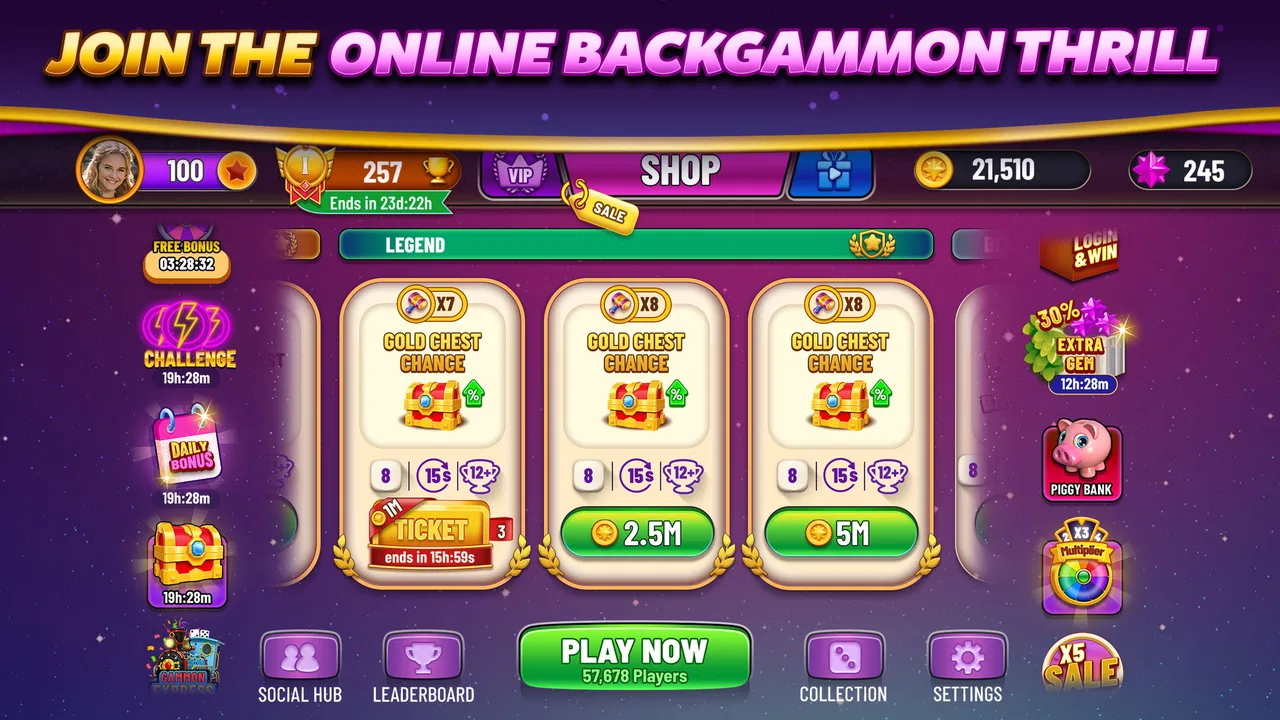
Backgammon Plus is free to download, which removes the biggest barrier for anyone who simply wants to test online backgammon. The game includes in-app purchases ranging from $0.49 to $99.99 per item. That is the important spending context: there is a wide gap between a small optional purchase and the most expensive listed item, so I would approach the shop carefully rather than tapping through it casually.
You May Also Like

 Blood Strike: 2.5 Anniversary
Blood Strike’s Loadouts Turn Every Drop Into a Tactical Gamble
A close look at Blood Strike’s custom loadouts: how fast access to signature weapons reshapes its battle royale rhythm, rewards preparation, and narrows the gap between fights.

 Pandora - Music & Podcasts
Pandora’s Music Is Easy to Start, but Harder to Recover
Pandora’s strength is its low-effort path from a seed to a station. Its weak spot is how much confidence it asks you to place in connection, setup, and quiet recovery.

 8 Ball Pool
 Is Built on Rivalries, Rematches, and Routine
A close look at the rivalries, rematches, shared routines, and unanswered safety questions that turn a quick pool match into a persistent mobile community.

 Samsung Music
’s Quiet Strength Is Playing What You Already Own
Its reach comes less from spectacle than from dependable access to a personal library. That simplicity is both the app’s strongest retention engine and its ceiling.

 AccuWeather: Weather Radar
AccuWeather Review: A Quick, Clear Forecast for Everyday Decisions
For everyday plans, the best forecast is the one you can understand quickly. AccuWeather makes rain timing, radar, and local conditions easy to act on, with a few trade-offs.

 Hill Climb Racing
Why Hill Climb Racing Still Turns Crashes Into One More Run
A tiny car, a bumpy hill and one more upgrade: Hill Climb Racing keeps resurfacing because its simple chaos makes every near-miss feel personal.
More From Our News Desk



I would not treat the presence of purchases as proof that the game is unfair. The available purchase information tells me the price range, but not enough to conclude how spending affects play, how frequently offers appear, or whether purchases are mainly cosmetic, convenience-based, or connected to progression. A responsible decision is therefore to enjoy the free starting experience first and decide later whether anything in the shop is genuinely useful.
For a casual player, that approach is especially sensible. Backgammon works well in short bursts, so there is little reason to spend immediately just to make the game feel worthwhile. I would play several sessions, see whether the online format suits me, and only then consider an optional purchase. If you are downloading it for a child or sharing a device, the age rating is Everyone, but I would still keep an eye on purchase access because the listed upper price is substantial.
The game was released on Apr 11, 2023, and the current version is 6.2.1. It supports devices running Android 7.0 or later. Those details make it fairly approachable for people using older Android hardware, although the actual comfort of play will still depend on the phone, screen size, and connection. I prefer a board game that remains readable on a smaller display, because tiny pieces or crowded controls can turn a relaxing match into needless frustration.
Why the free entry point works
The strongest part of the free model is that backgammon itself does not need a long warm-up. You can understand the board quickly, then spend your time learning when to move a checker and when to leave it alone. That makes the app useful for a lunch break, a quiet evening, or a quick match while waiting for an appointment.
My practical advice is to treat the first sessions as a test of rhythm rather than a test of skill. Notice how quickly matches begin, whether the board is comfortable to read, and whether online play feels smooth enough for you. Those answers matter more than the existence of a large shop. If the core match loop does not feel pleasant without spending, buying something will not solve the underlying problem.
Progress, pressure, and the emotional side of dice
Backgammon has a particular kind of pressure because every turn combines choice with uncertainty. I can make a sound move and still receive an awkward roll. That is not a flaw in this game; it is part of the board game’s identity. Still, digital play can make unlucky sequences feel more intense because the opponent is waiting and the next decision arrives immediately.
One useful habit is to separate the quality of a decision from the result. If I expose a checker because the position demands a chance, getting hit does not automatically mean the move was foolish. Conversely, a lucky roll should not convince me that a careless plan was brilliant. This mindset is valuable in an online setting, where a quick loss can otherwise push a player toward rushed rematches or unnecessary spending.
I would be cautious about assuming that every visible reward or advancement system has the same meaning. The confirmed purchase range does not explain the full progression structure, and I would not invent a story about ranks, energy, lives, or unlocks. What I can say from using the game’s premise is that the main source of pressure comes naturally from competitive matches: wanting to win, wanting to recover after a bad roll, and wanting to prove that the previous result was not representative.
That pressure can be enjoyable when you set a stopping rule. I often prefer deciding in advance that I will play a fixed number of matches or stop after two frustrating losses. This is more useful than chasing a particular result, especially in a dice game. It protects the casual purpose of the app and makes optional purchases easier to evaluate rationally.
A realistic everyday session
Imagine having ten or fifteen quiet minutes before a train. You open the game, enter an online match, and begin with a familiar board rather than a long tutorial. The first few turns are comfortable, but then you must choose between building a safer position and trying to hit an exposed checker. A strong roll changes the balance, the opponent responds, and suddenly the short break has become a focused contest.
That is where the app makes sense to me. It gives a small window of time a clear activity without demanding the commitment of a large strategy game. The downside is that an online match may not end exactly when your free time does. I would avoid starting one if I know I must put the phone away immediately, because abandoning a competitive game is less satisfying than finishing it.
For learning, I would use each match as a review of decisions rather than simply counting wins. After a loss, ask which move created the most danger: an exposed checker, an overly cautious position, or a failure to build a useful block. This turns the app into a lightweight practice table. It will not replace studying backgammon theory, but it can make abstract ideas easier to recognize during real play.
How fair does online competition feel?
Fairness is the question I would ask before recommending any dice-based online game. Players naturally wonder whether outcomes are random, whether opponents have advantages, and whether purchases can change the contest. The information available for this title confirms online play and the existence of purchases, but it does not establish the exact relationship between spending and competitive results.
Because of that, I would not promise a perfectly level competitive environment. I also would not accuse the game of manipulating rolls without evidence. The honest position is narrower: the game places you in a format where chance already has a major role, and the purchase range means you should pay attention to what you are buying before assuming it has no competitive relevance.
From a player’s perspective, fairness has two separate parts. The first is the dice experience: both players should be subject to the same basic uncertainty. The second is the economy around the match: purchases should not make a weaker player feel that the board itself can be bypassed. Since the confirmed details do not describe the individual items, I would judge this personally by reading each purchase description and noticing whether it changes the contest or merely changes presentation or convenience.
That distinction also helps prevent a common mistake. A player can lose several matches through ordinary variance and interpret the streak as proof that the game is rigged. In backgammon, that conclusion is not reliable on its own. I would instead watch for patterns in how the game explains results, how clearly it presents any paid option, and whether I can continue playing comfortably without opening the shop.
Where it compares well with other board-game choices
Compared with a physical backgammon set, this app is more convenient and better suited to finding an opponent online. You do not need a table, spare checkers, or a partner in the same room. The trade-off is that the tactile pleasure disappears, and the match depends on a screen and an internet connection rather than a face-to-face conversation.
Compared with a purely offline backgammon app, the online focus is the main attraction. Playing against a person can feel more unpredictable and memorable than repeating matches against a computer. On the other hand, an offline alternative is often better when traveling without reliable connectivity, when you want to pause freely, or when you prefer a private practice session without competitive pressure.
Compared with broader board-game collections, this is a more focused choice. That focus is helpful if backgammon is what you actually want; there is less distraction from unrelated games. It is less suitable if you want chess, checkers, card games, or a large variety in one download. I would choose it for a specific backgammon habit, not as a universal board-game replacement.
What I would check before committing
There are several practical questions I would answer during the first week. Can I start a match without feeling pushed toward a purchase? Is the board readable on my phone? Do online games fit the amount of time I usually have? Do I enjoy the uncertainty of dice, or do I prefer strategy games where planning has more control over the result?
The current version is 6.2.1, so keeping the app updated is sensible when the device supports it. I would also check that the phone meets the Android 7.0 minimum requirement before downloading. Compatibility is not exciting, but it prevents the common disappointment of trying to install a game on hardware that cannot run it.
I would also make a personal spending boundary before exploring the shop. Since individual items can range from $0.49 to $99.99, the safest workflow is to inspect the exact item, decide whether it affects play, and avoid buying while frustrated after a loss. A cheap purchase can still become poor value if it is repeated impulsively, while an expensive purchase deserves especially careful consideration.
Another useful test is to play at different times of day and see whether the online experience matches your routine. I am not claiming that matchmaking quality changes at particular times; I simply find that a game feels different when I am relaxed compared with when I am rushing. If the app is meant for short breaks, it should fit those breaks without making every session feel like a commitment.
For families, the Everyone rating is reassuring as a broad content classification, but it does not replace normal device supervision. I would use purchase controls on the phone and explain that free installation does not mean every in-game option is free. That is a simple safeguard, especially when a game combines a familiar family board game with optional digital spending.
My trust verdict after weighing the trade-offs
Zynga’s Backgammon Plus is a reasonable recommendation for someone who wants a focused, accessible way to play backgammon online. Its free entry point, familiar rules, and short-match potential make it easy to try. The average rating is 4.2 from around 61 thousand ratings, and it has more than 1 million installs, which suggests that it has reached a substantial audience without turning the numbers into a reason to ignore your own experience.
I would recommend it to a casual player who enjoys dice, wants human competition, and values convenience over the physical feel of a real board. I would also recommend it to someone trying to build better backgammon instincts through repeated decisions. The most useful approach is to focus on position, accept that luck will sometimes dominate a game, and use a clear spending limit from the beginning.
I would skip it if you dislike online competition, need a fully offline board, or want a game where careful planning almost always overcomes randomness. I would also choose a different option if my main goal were a broad collection of board games rather than backgammon specifically. The focused design is a strength only when the central game is the one you came to play.
My final recommendation is to try the free matches first and judge the shop separately from the board. The purchase range deserves attention, but it is not enough by itself to label the game unfair. What matters is whether you can enjoy the core experience without feeling pressured, whether the online format suits your schedule, and whether the uncertainty of dice feels exciting rather than exhausting. For me, it works best as a convenient digital backgammon table: easy to pick up, capable of creating genuinely tense moments, and worth keeping free unless a clearly understood optional purchase offers value you can explain to yourself.
FAQs for Backgammon Plus - Board Game
01What is Backgammon Plus and how does it differ from other backgammon apps?
Backgammon Plus is a digital version of the classic board game, designed for both Android and iOS platforms. It offers a modern interface with enhanced graphics and interactive features. Unlike other apps, Backgammon Plus includes social connectivity, allowing players to compete with friends or engage in tournaments worldwide, enhancing the traditional gameplay experience.
02Are there in-app purchases or ads in Backgammon Plus?
Yes, Backgammon Plus includes in-app purchases that allow players to buy coins and other game enhancements. These purchases can enhance gameplay by unlocking additional features or boosting progress. The app may also display ads, which can be removed through certain purchases. This dual model supports both free and premium experiences.
03Is an internet connection required to play Backgammon Plus?
While Backgammon Plus can be played offline against AI opponents, an internet connection is required for multiplayer modes and accessing leaderboards. The online features enhance the gaming experience by allowing players to connect with others globally, participate in tournaments, and track their progress against other players.
04How user-friendly is the Backgammon Plus interface for beginners?
Backgammon Plus is designed with an intuitive interface that caters to both beginners and experienced players. It includes tutorials and tips to help new players understand the rules and strategies of backgammon. The user-friendly design ensures that players can easily navigate the app and enjoy a seamless gaming experience.
05Can I play Backgammon Plus with friends, and how do I connect with them?
Yes, Backgammon Plus allows you to play with friends by connecting through social media accounts or directly through the app’s friend list feature. You can invite friends to play, join their games, or challenge them to matches. This connectivity enhances the social aspect of the game, making it more engaging and interactive.
Pros
- Engaging multiplayer experience.
- Intuitive interface for easy navigation.
- Customizable game boards.
- Real-time chat with opponents.
- Frequent updates and improvements.
Cons
- In-app purchases can be pricey.
- Occasional connectivity issues.
- Ads can be intrusive at times.
- Limited offline play options.
- Some features require login.

Backgammon Plus - Board Game
Gallery